

Design Support
With our team, tools and experience we support any maritime project: CFD, FEM, hull optimisation, 3D visualisation and stability, applied where they add the most.
Design optimisation
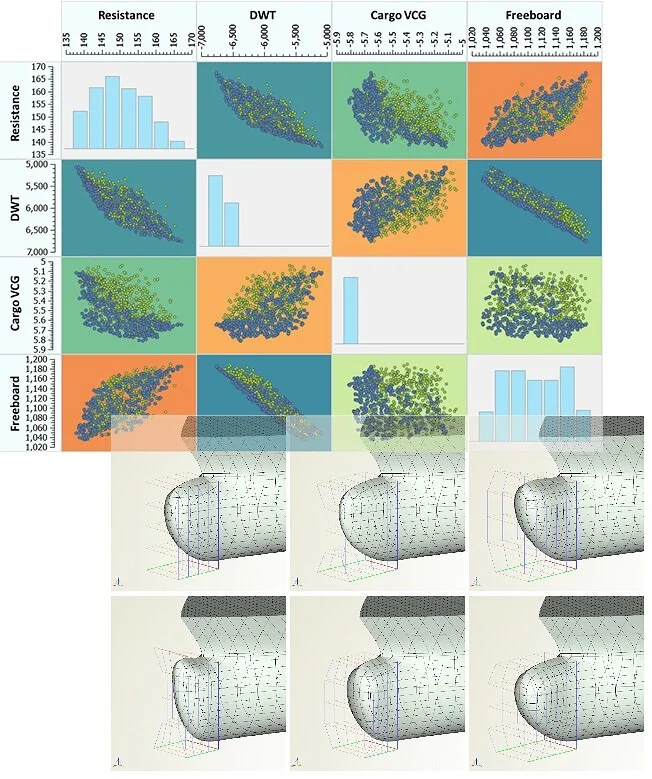
For any external design, DEKC can review and optimise it so the design suits our clients' needs even better than it already did.
Whether this involves pushing the boundaries of what is possible within the regulations, feasibility studies for conversions, or parametric optimisation of the vessel hull shape, improved performance is always the outcome.
CFD analysis
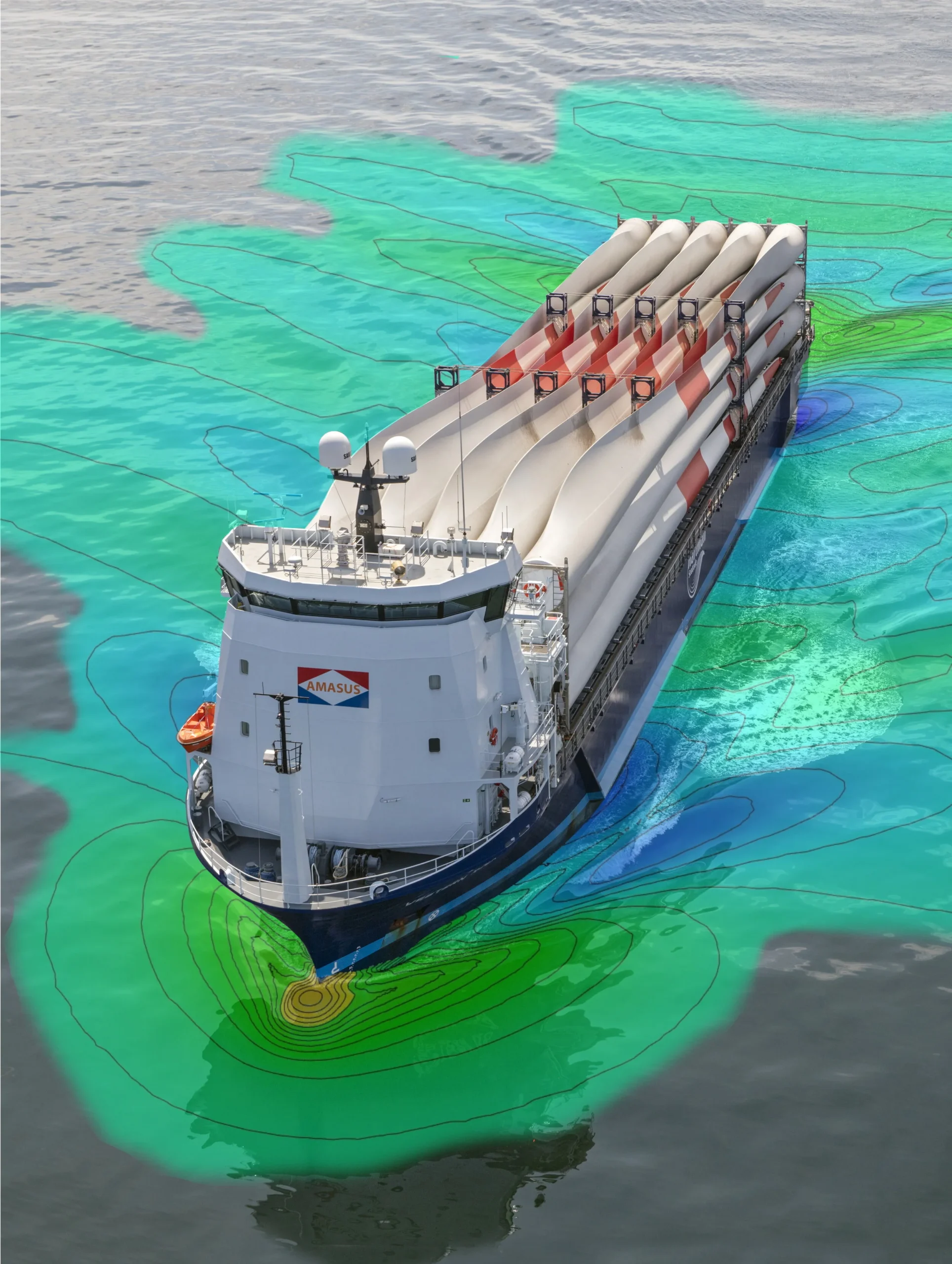
CFD, or Computational Fluid Dynamics, is the state-of-the-art method of calculating the speed and power of a vessel.
Our virtual towing tank offers the same accuracy as traditional model tests at a fraction of the cost, and allows us to take factors such as wind into account as well.
In addition, when combined with parametric hull optimisation, CFD is a powerful tool for reducing fuel consumption and thus operating costs. The analysis of wake fields, optimal appendage positioning, and trim optimisations are all further parts of the capability this tool offers us.
FEM analysis
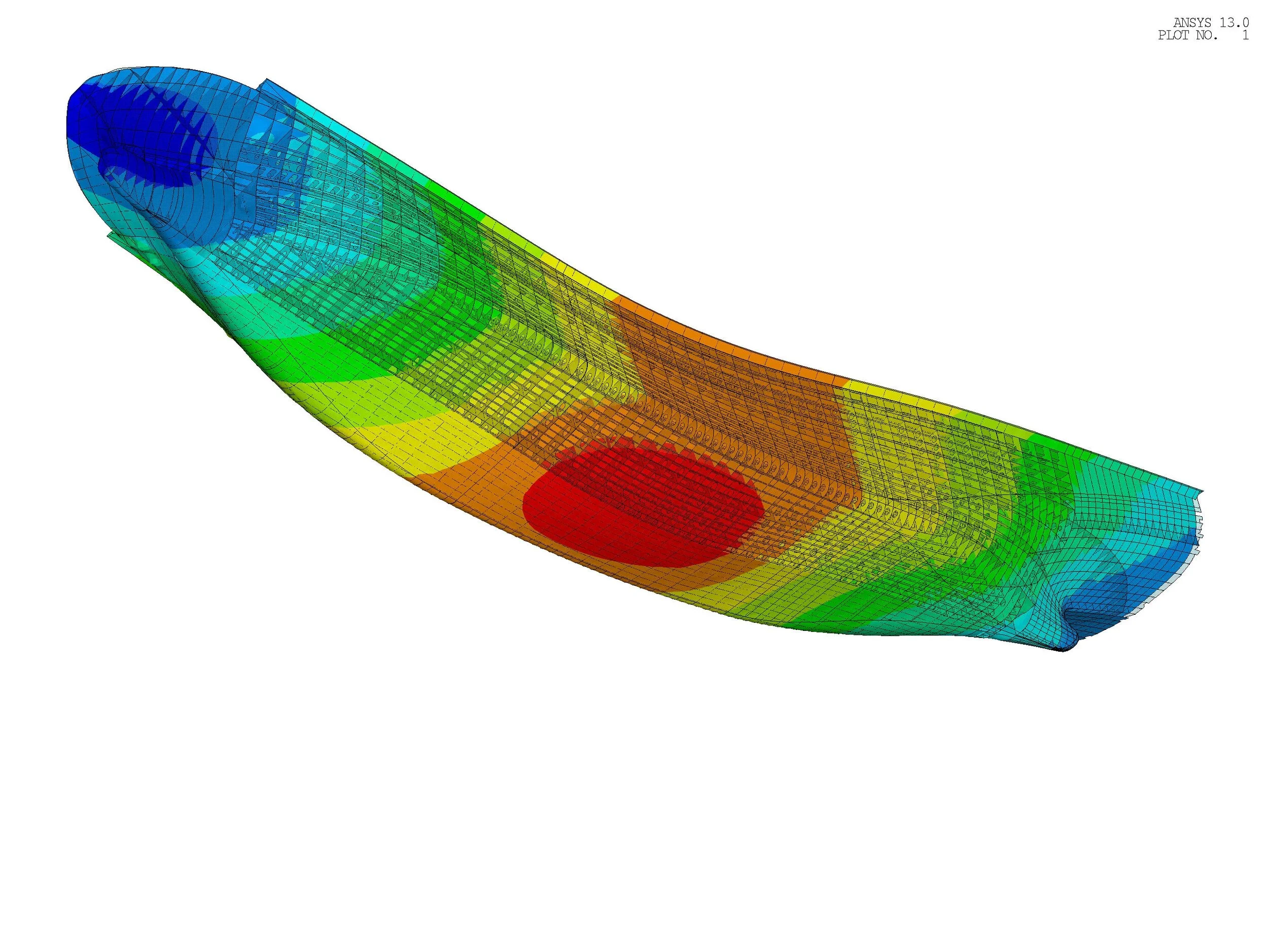
Finite Element Method (FEM) analysis is the state-of-the-art method of calculating stresses in complex or highly loaded structures.
As ships become more complex, extensive structural analyses are more often required by classification societies and ship owners to prove the structural integrity of the design.
Furthermore, this method provides us with more opportunities to optimise the structure of a vessel. Besides the calculation of global loads, local effects can be accurately determined and modal or fatigue analyses can be performed.
3D visualisation
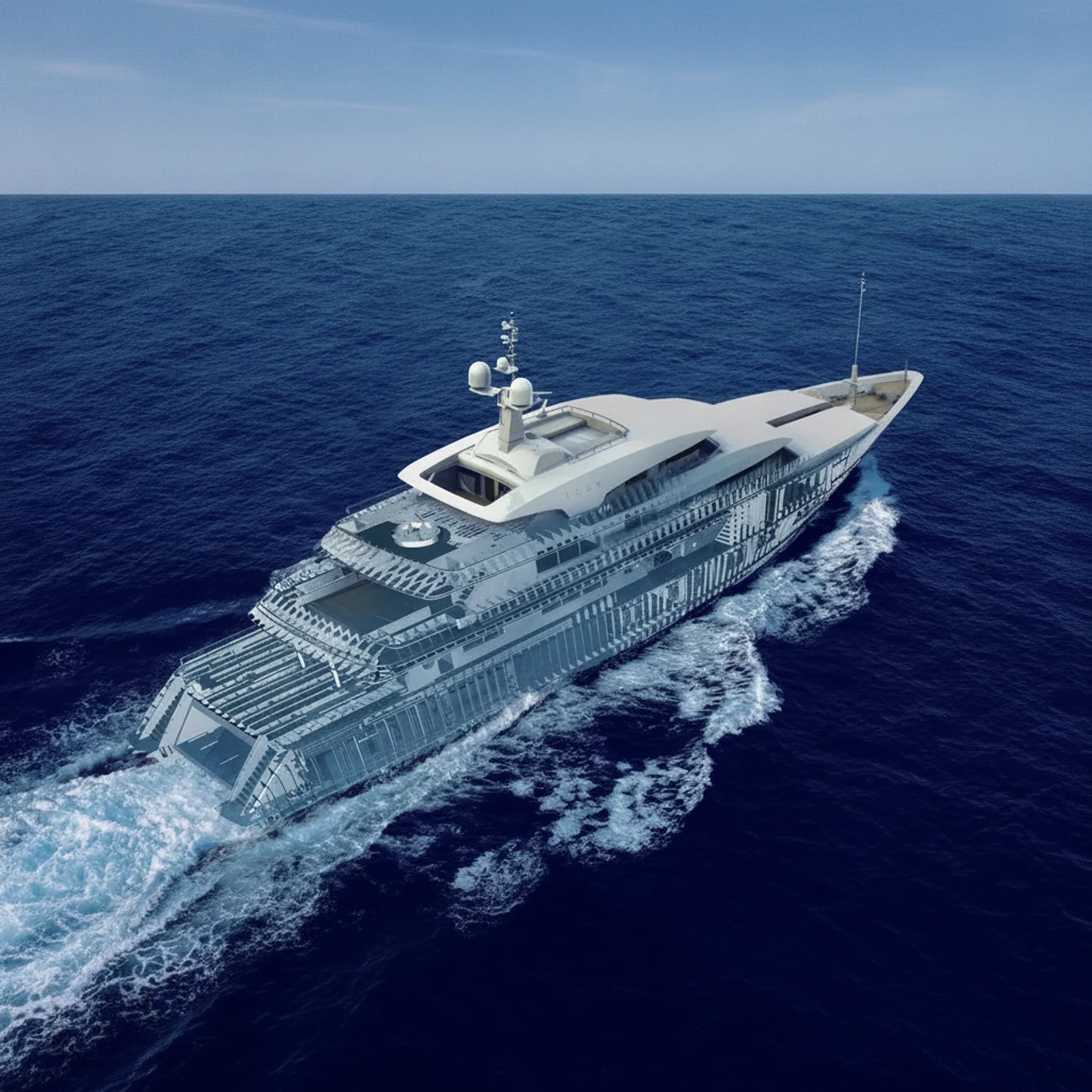
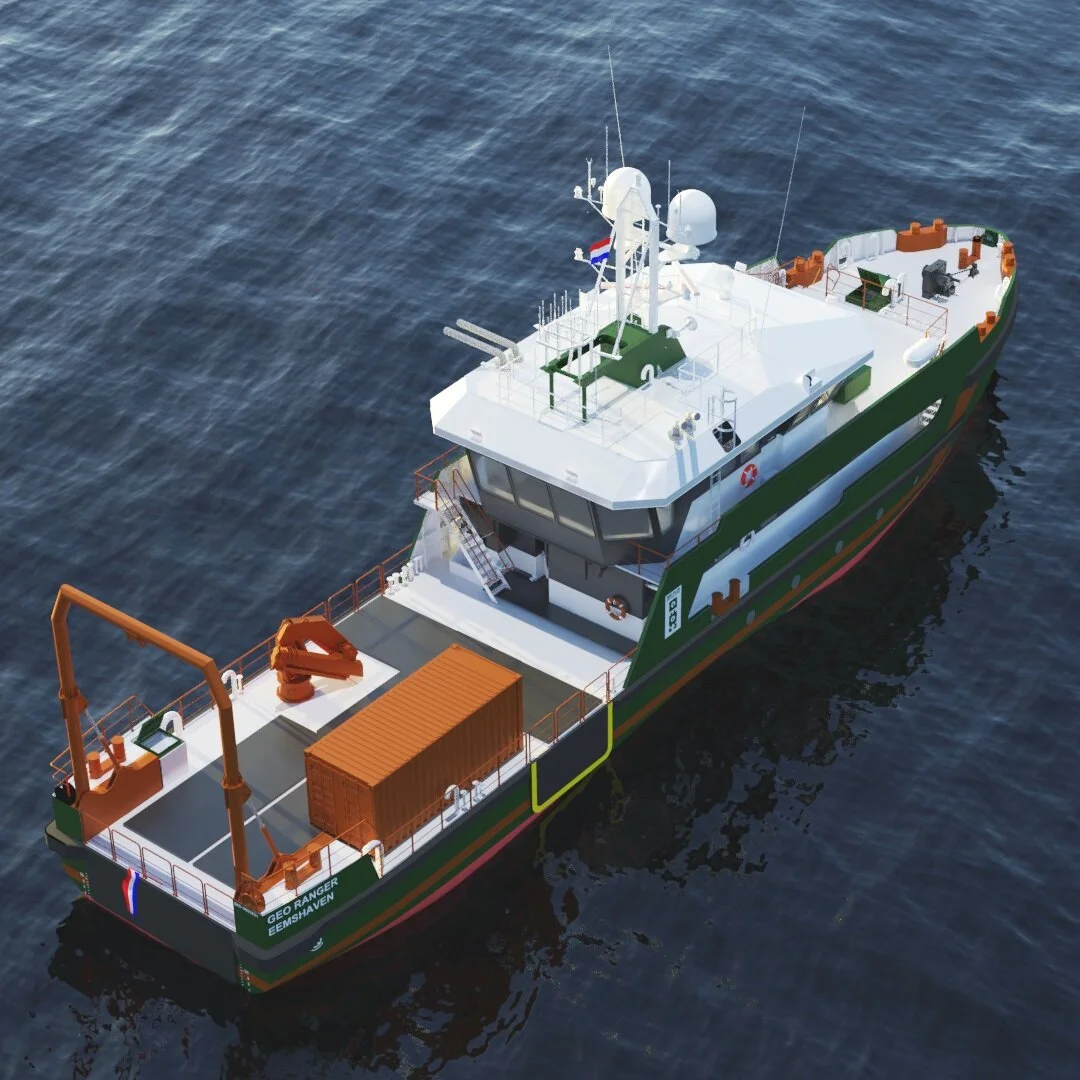
At DEKC, all design and engineering, from the first drawings to the complete vessel, is done in 3D.
This allows us to provide our clients with detailed 3D visualisations of the final product very early on in the design process.
Moreover, we can present these visualisations in a virtual reality environment for increased immersion and comprehension of the design. Besides simply viewing vessel designs, it is also possible to simulate operations or perform training in this environment.
Stability analyses
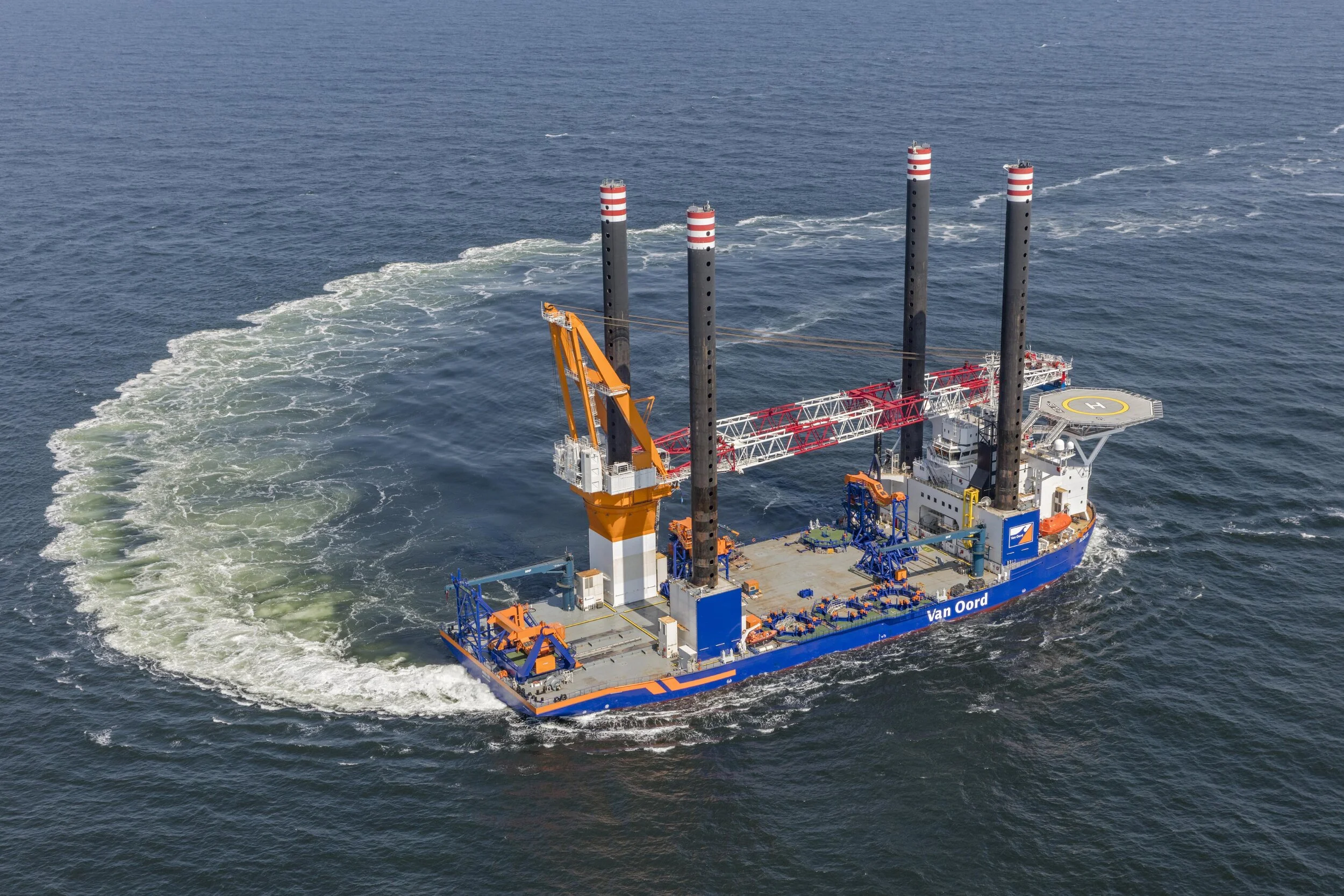
Our naval architects have broad experience and in-depth knowledge of the physics, dynamics and regulations involved with stability.
We can provide assistance in a wide range of challenges such as the analysis of (un)loading operations, ballast sequence assessments, and capacity optimisation and expansion, as well as the execution of deadweight surveys and inclining tests in accordance with IMO requirements.
Proof on real vessels
Eidsvaag Omega
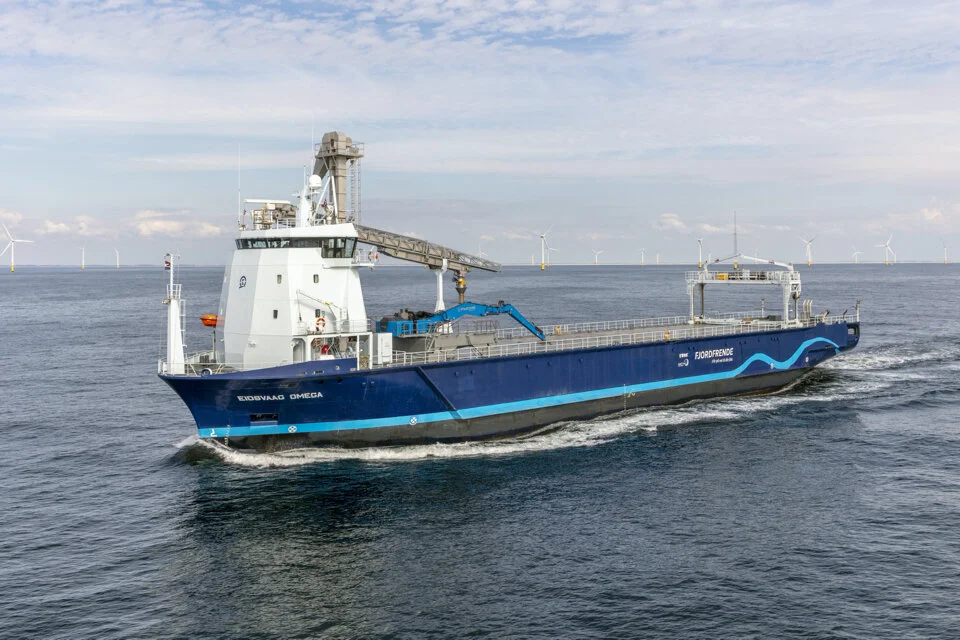
Commercial farming of fish has seen an increase over the past years, resulting in the need for more dedicated vessels to supply these fish farms. Norwegian based Eidsvaag bought the cargo vessel Hartman Baltic, a 3,500 ton dwt roro ship, from the Dutch Hartman Marine Group to convert into a fishfeed carrier.
The conversion of the Eidsvaag Omega was managed and executed by the Hartman Marine group. DEKC Maritime was responsible for most of the design and engineering work required for this conversion. The modifications were performed at the Damen yard in Harlingen and at the Hartman Marine facilities in Urk.
Some of the modifications include: design and engineering of the new bulwark on the stern, refit of thruster rooms and engineering of a new generator room, as well as replacing the forward hatches with a fixed deck. More specific modifications are the placing of an unloader crane and elevator for the fishfeed handling and unloading system, two additional Veth thrusters and a DP system.
More related projects
How do you make it work? That's what interests me most.
Benthe de HaanNaval Architect
Read the interview