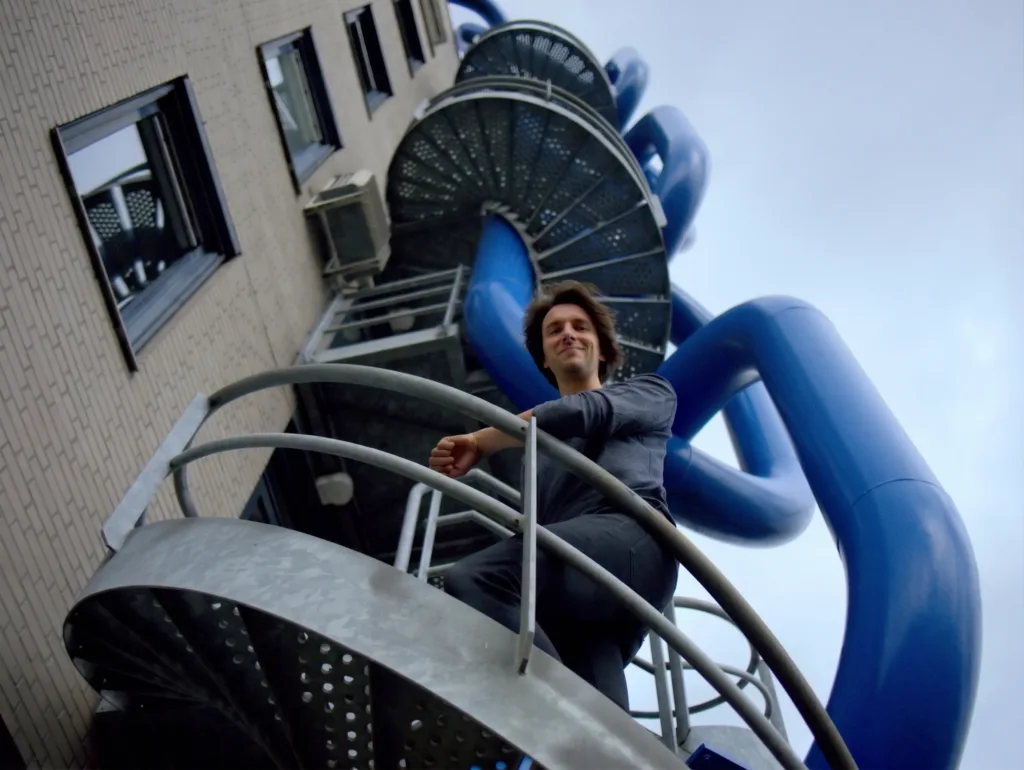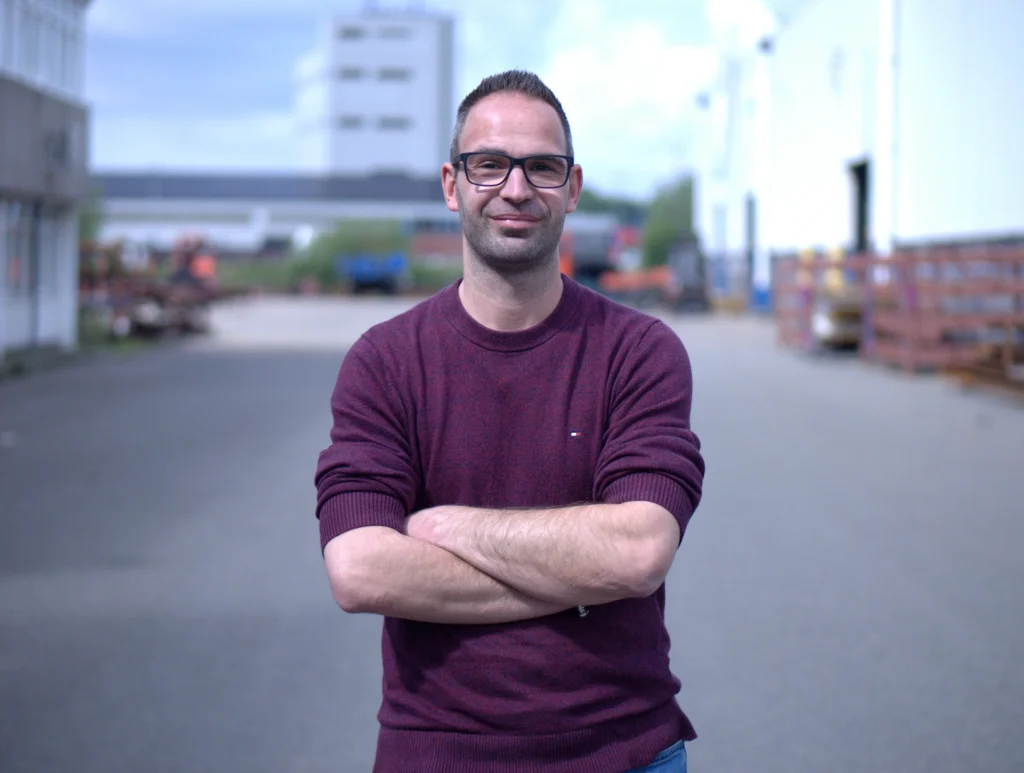

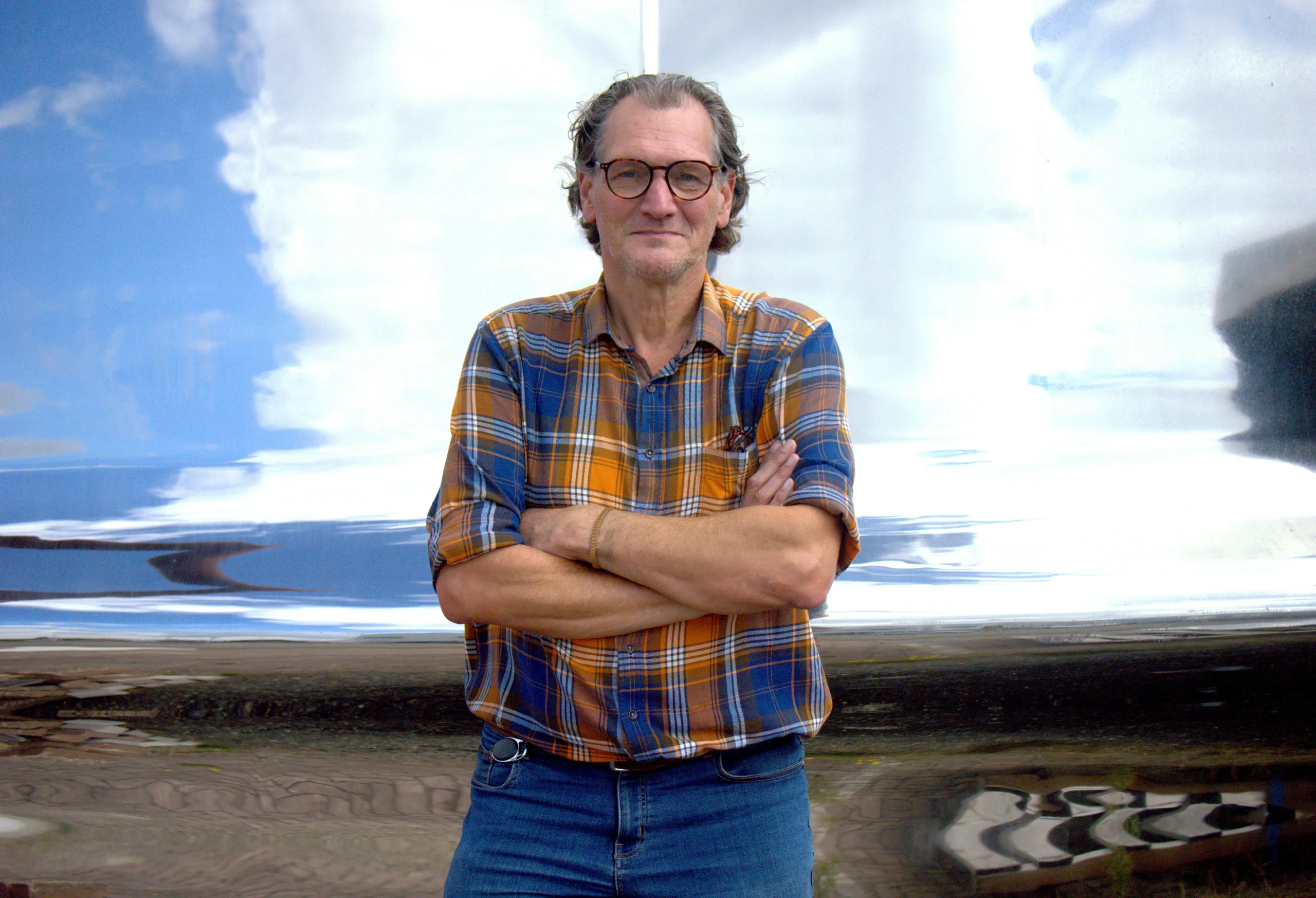
Nico de Meester, 61, has spent his career watching computers transform ship design, and finding new ways to push that transformation further. From tracing paper and drawing boards to 3D modelling, self-built calculation interfaces and, most recently, AI, one idea has remained constant throughout his years at DEKC's Knowledge Center: programming, connecting and integrating.
Words by DEKC editorial
“Programming, connecting, integrating. That has been the thread running through everything I have done.”
Nico de Meester is 61, and his career has unfolded alongside the arrival of computers in ship design. He has been with DEKC and its predecessor since 2008, following several years on the software side of shipbuilding.
When he started out, ships were still drawn by hand. "In 1984 we were still drawing on the board, on tracing paper and film. Then, slowly, computers and AutoCAD started to find their way into the work."
"A computer, that's the future"
It began at the kitchen table. "In 1982 my father said to me: you have to start working with computers, because that's where the future is." His father was a teacher who had moved to the nautical college in Vlissingen, and he had recognised the shift early.
They bought a BBC Micro, and Nico started programming in BASIC. "That really became the foundation for everything that followed."
From the drawing board to 3D
In 1984, Nico went to shipbuilding college in Dordrecht, where design still meant a pencil, tracing paper and film. By the time he graduated in 1990 and started his first job, things were already changing. "The head of the department said: if you come here, we'll buy you a computer with drawing software. So I've always been looking in that direction."
He spent two years at Shipyard the Biesbosch before moving to Shipyard De Schelde in Vlissingen, where he ran into a problem common across the industry: too much of the design process still depended on paper. "They kept forgetting the bolts, the penetrations. They were constantly running into collisions between components, designed by different engineering departments. When you look at how complicated a frigate is, in its layout and its outfitting, you run into the same problems again and again. That's where you really needed 3D."
It was the engineering, not the ships
What drew Nico to shipbuilding was never really the ships. "Otherwise I would have gone to sea." It was the technology. As a boy, he was always building things, model kits or something he had made himself, and somehow they nearly always ended up with curved shapes. "I was fascinated by 3D, by 3D faired shapes." That is still what he works with today: 3D geometry, hull forms and faired lines.
Moving into 3D also suited the way he thinks. On a drawing board you had to decide in advance which view you needed, while holding the three-dimensional shape in your head. "Now you simply draw in a plane and see what happens." He describes it, with a hint of humour, as a form of laziness. You no longer work everything out beforehand; you build the model in 3D and look at the result.
Ahead of the hardware
His ambitions sometimes ran ahead of what the technology could handle. In 1994, at Shipyard De Schelde, he experimented with genuine 3D software based on MicroStation. "It could already do a lot. I could work parametrically in all sorts of ways, which I thought was fantastic. The problem was that it simply didn't work. The computers, the memory, the hard drives, they just couldn't handle it." So the company moved to NUPAS-CADMATIC instead: less ambitious, but closer to production and the way ships were actually built.
Before DEKC, Nico worked for the company behind NUPAS-CADMATIC as a support engineer, testing whether the software did what it should and training users at shipyards across the Netherlands and abroad. The underlying theme was already there: programming, connecting and integrating.
Room to develop knowledge
What kept Nico at DEKC was the freedom to develop new ideas. "It's not called a Design, Engineering and Knowledge Center for nothing. Developing that knowledge is what I've always enjoyed. I wanted to think a bit outside the box, and here I was given the freedom to do that."
Building the bridges between software
Back at DEKC there was a practical challenge: 3D models had to be transferred into ANSYS for calculations, but ANSYS offered no easy way to import the geometry. So Nico built the interfaces himself, moving plates and profiles from the model into the calculation software, first in Visual Basic, later in Python.
To him the reasoning is straightforward. "If a job takes you ten times as long by hand, and you can build a few small tools or interfaces that save you all that time, then it seems logical to me." The key is having people who enjoy working that way. "One person says: I'm purely a shipbuilder, a designer, a naval architect. Then you probably don't find this kind of work interesting. This is exactly what I enjoy."
What the work looks like today
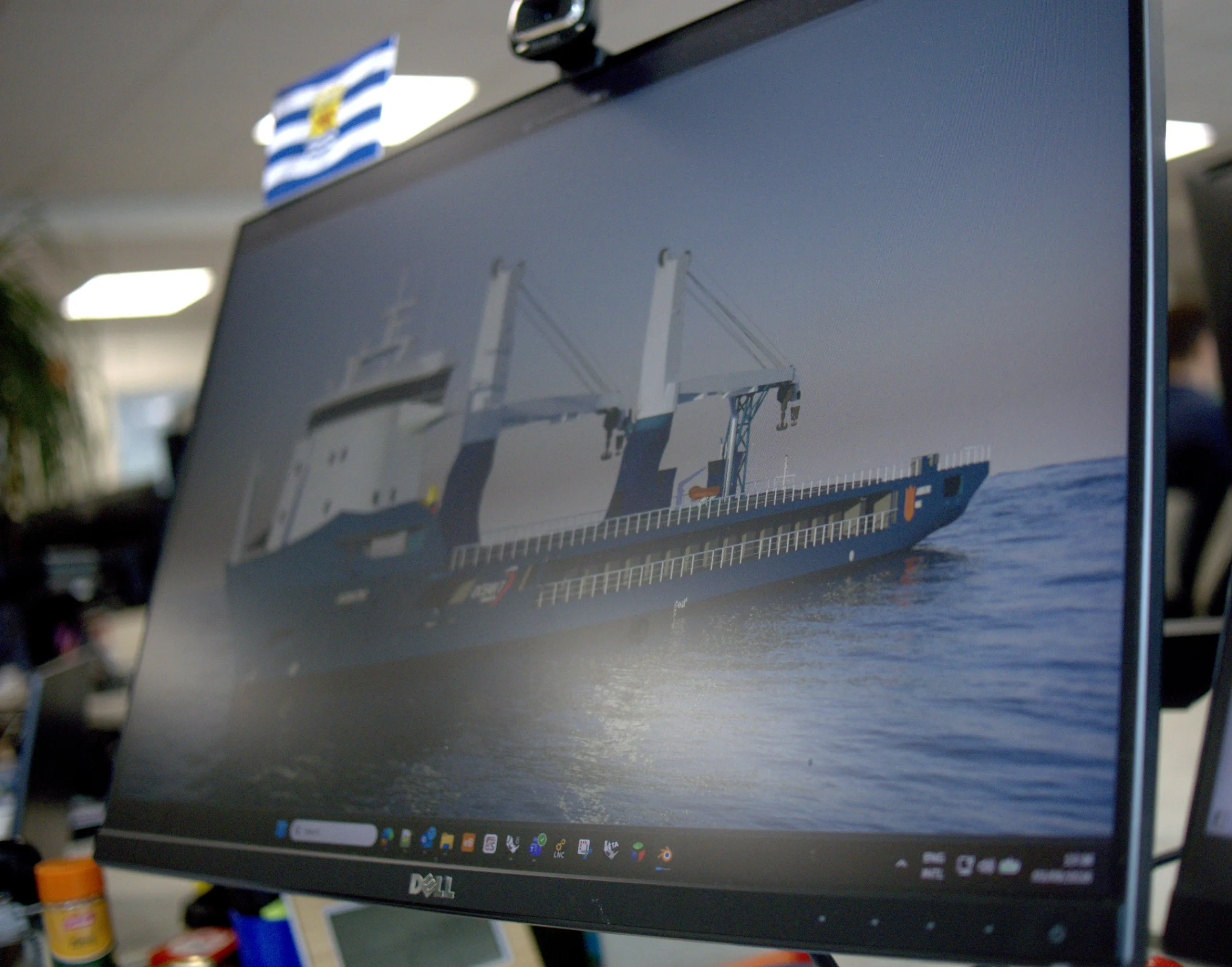
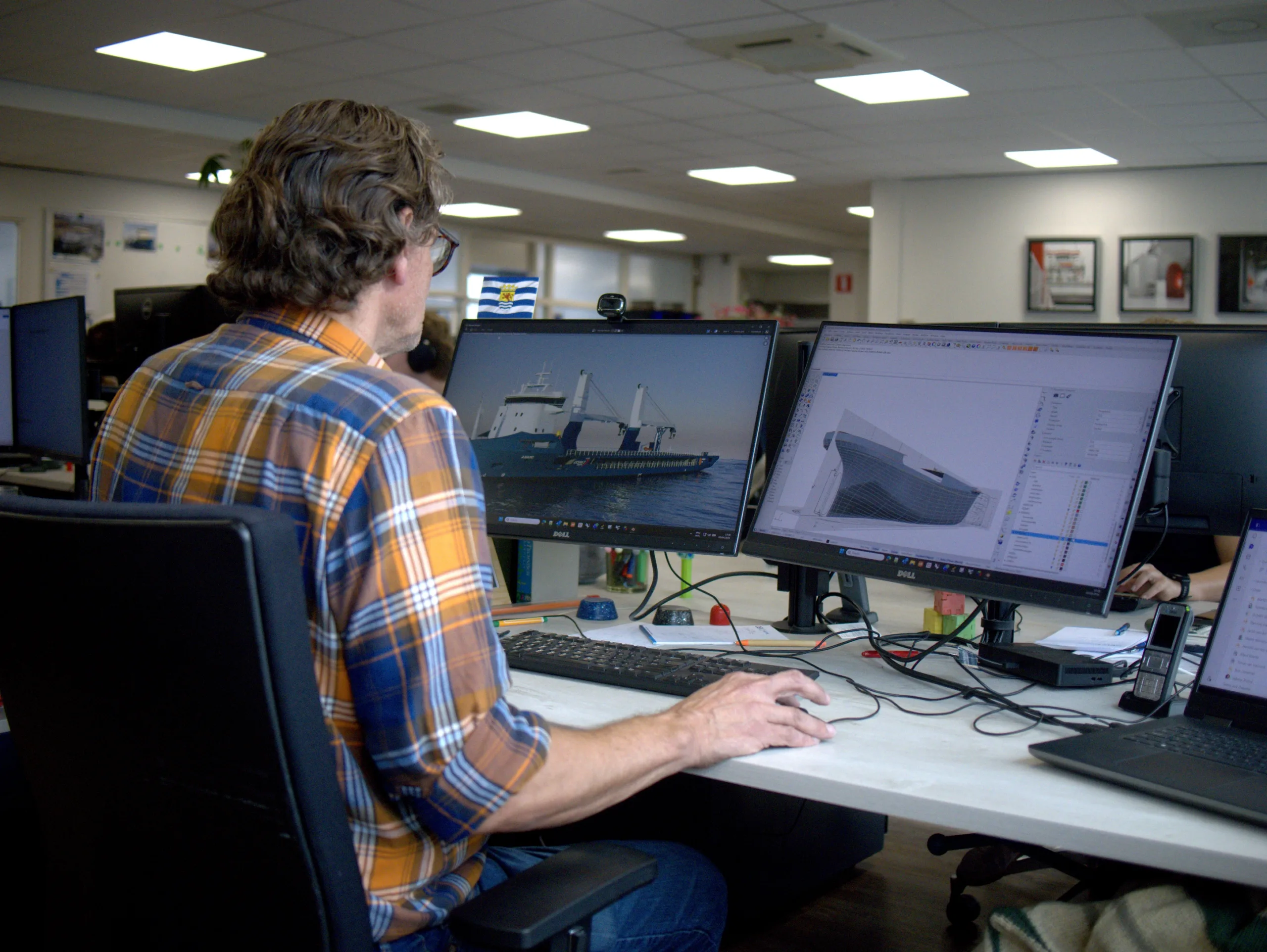
Today Nico's work is largely conceptual, right at the start of a project. When a client arrives with a design, it first goes through the design process, after which something needs to be visualised. "I usually create those visuals in Rhino and Blender. The owner can put a picture or a model in front of a financier and show them what the intention is. The financier has something concrete to work with, and can use that to arrange the financing."
As a project moves towards production, owners often want to make their own mark on the vessel. "They want their own identity in the ship." Nico shapes the elements that give it that identity: the wheelhouse, deckhouse, mast and other distinctive features. He also builds the models that go into ANSYS for analysis, after which the geometry moves on to production to be detailed further.
Then there is the integration work. A customer might arrive with a hull already modelled in another package, with no easy way to get it into the system the yard uses. "Then you try to build an interface so the model can be imported, so we can work with it and deliver what the customer needs. I'm a bit of a jack of all trades when it comes to connecting packages and generating output."
Three months into AI
Three months ago, Nico started experimenting with AI, and it caught him off guard. "I hadn't expected it to be this far along already, including inside 3D software." He can see where it could lead. A company could take everything it has learned over decades, its 2D and 3D work, its calculations and programming know-how, and turn that into its own software through AI.
He has already started testing the idea. "I make a ship in Rhino and give the AI commands: fair it like this. It comes back with something, and I can say: that's not right, adjust it. I give it a few pointers and it does it." But there is a caveat. AI can generate an answer; it cannot replace decades of experience. "You can still see that my knowledge from the past is needed to correct where things need to be corrected."
That, ultimately, is what Nico believes a Knowledge Center should be about: not just having knowledge, but building it into the tools people use, and knowing enough to recognise whether the result is right.
“We have the knowledge and the skills in-house. That's what allows you to apply it, and to check it.
Related